
Lafayette's Dated Arrest Reports
LPSO publishes its official multi-day arrest record through the LPSO Daily Arrest Report. It is a page of date-labeled reports with a subscription prompt for daily arrest information. One useful quirk: a report page headed September 8 carried arrests dated September 7. That one-day gap is a fair hint the report can lag behind events. Treat it as a pattern, not a promise. Keep this report separate from the LPCC 365Labs roster. The blotter collects reported arrest events from LPSO, Lafayette Police, Louisiana State Police, Scott Police, and other agencies. An agency field names each one. The roster answers a different question: who is housed or newly processed at LPCC right now. Someone listed in a dated report may have bonded out, transferred, or been released. That can happen before you finish reading the entry.
The official report interface appears in the LPSO source capture.
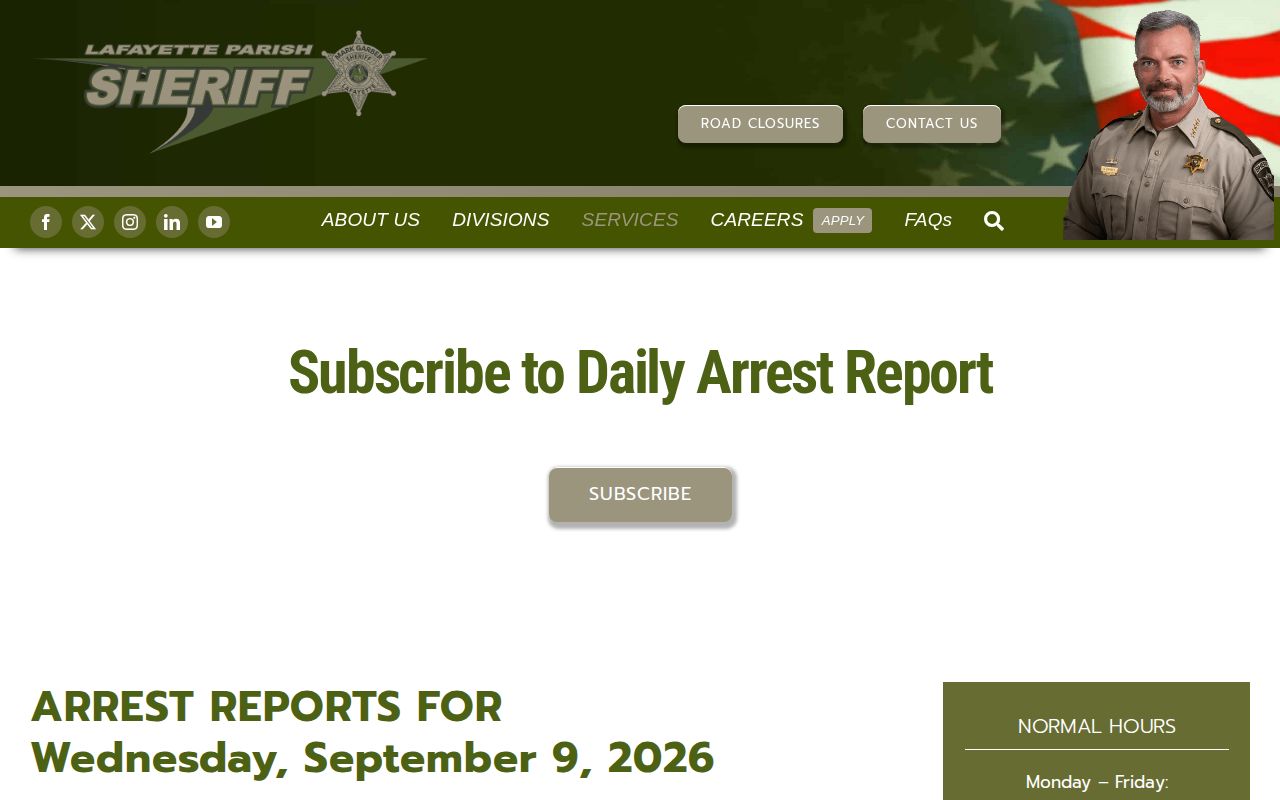
The capture shows the date-oriented official report format used for the parish blotter.
Read Lafayette's Police Blotter
Begin with the date label, not a name. That label tells you which report page you have open. The arrest date and time inside an entry identify the actual event. Next, check the agency and incident number. Those two fields point to whichever office holds the underlying report. This matters. LPSO publishes the parish report, and it is easy to assume every arrest in it was made by LPSO when it was not.
- Open the current LPSO Daily Arrest Report and record its displayed report date.
- Locate the person, then note the arrest date and time, arresting agency, incident number, and stated charges.
- Compare adjacent dated reports when the event occurred near midnight or before a weekend or holiday.
- Use the agency and incident number for a report inquiry; use the booking number for LPCC, VINE, or court cross-checks when available.
- Check the court docket for later filing decisions and disposition rather than treating the blotter charge as final.
Need a same-day custody answer? The Lafayette arrests last 24 hours route uses the separate 365Labs recent-bookings filter. The blotter works better for reconstructing activity across dates, but it cannot tell you someone is still in jail.
Lafayette Blotter Entry Fields
The report offers a richer, incident-oriented set of fields than the short booking filter. That extra detail helps separate two people with similar names. It also routes a records request to the right office. Context still matters. An address or block comes from the source. It may be neither a home address nor the incident scene unless the report says so. Read every label with that caution in mind.
| Report field | Meaning and limit |
|---|---|
| Name and age | Entered identity details; compare other identifiers before deciding two entries concern the same person. |
| Arrest date and time | The event time reported in the entry, which may precede the page's display date. |
| Address or block | A labeled report field, not automatic proof of residence or event location. |
| Charges | Accusations reported at arrest, subject to later prosecutorial and court action. |
| Arresting agency | Identifies the agency connected to the arrest and the best incident-report contact. |
| Cause and incident number | Useful references for matching the event to an agency report. |
| Property and associates | Context supplied by the report, not a finding that an item or another person proves guilt. |
The official report is text and field based, not a mugshot gallery. Any photo found elsewhere should be checked against the official name, date, agency, and booking identifier before you trust it. Charges can also be amended, refused, or dismissed as the case moves through court.
Weekend Arrest Report Timing
LPSO makes no separate weekend or holiday service promise for the Daily Arrest Report. Weekend events are not combined into one report. There is no fixed hour, either. So skip any presumed Monday catch-up rule. Instead, read the report's own date and each entry's arrest timestamp. Several things can shift the sequence. The arresting agency may finish paperwork on a schedule of its own. Transport can delay a booking. A release decision may come before you ever open the report. Holidays change public office availability. Jail operations continue anyway. So "posted Monday," "booked Sunday," and "arrested Saturday" can describe three distinct stages. When a weekend entry matters, save the report date, arrest date, incident number, and agency. Those details sharpen a later request. The current LPCC roster answers present parish custody. The court file tells a later story. It shows what happened after charges reached a prosecutor or judge. Note: The report shows dated entries, not a weekly archive, weekend bundle, or guaranteed next-business-day release.
Agencies Inside Lafayette Arrest Logs
The arresting-agency field makes this report parish-wide in practice. Entries go beyond the sheriff and Lafayette Police. They include Louisiana State Police and Scott Police. Other municipal agencies also deliver arrested people to Lafayette Parish Correctional Center. None of that hands ownership to LPSO. Each incident report stays with its arresting agency. For the jail booking record, contact LPSO Records. For the narrative incident report, go to the named arresting agency. For a later criminal case, use the proper court and clerk. The 15th Judicial District Court handles parish criminal jurisdiction. Lafayette City Court handles city misdemeanors, ordinances, and traffic within its territory. Each source answers a different question and updates on its own clock. Regional news may cover enforcement initiatives, but no official standalone checkpoint-log feed exists. Selected stories cannot give you a complete operation list. A headline is never a substitute for the formal incident, booking, or court record.
JADES Changes Lafayette Record Checks
Lafayette Parish swapped JADES for 365Labs, and the switch touches current-custody and recent-booking searches most of all. The Daily Arrest Report is still a dated blotter. Nothing about the change turned it into a roster. Some older city pages keep sending readers to JADES, though, so a stale portal link can fail even while the dated LPSO report sits online. Use the report for the recorded arrest event. When the question is who is in custody now, take the current LPSO Offender Information route instead.
The transition notice carries one more warning. Some demographic fields may be missing inside 365Labs. That warning does not travel well. It should not be stretched onto the Daily Arrest Report's distinct field set, or used to merge two arrest records into one. Compare the report's agency, incident number, arrest time, and entered name against any booking number from LPCC. When they differ, ask the record-owning office rather than picking the more detailed version.
Lafayette Arrest News Context
A row-based police blotter cannot tell a story. Local news fills that gap. Outlets like the KATC crime section, KLFY, The Current, News 15/KADN, BY Local News, and the Acadiana Advocate run periodic crime and police stories out of Lafayette Parish. Their coverage is selective, not a complete arrest log. Photos differ by story, since agencies, editors, and incident scenes each supply them, so check captions and sourcing.
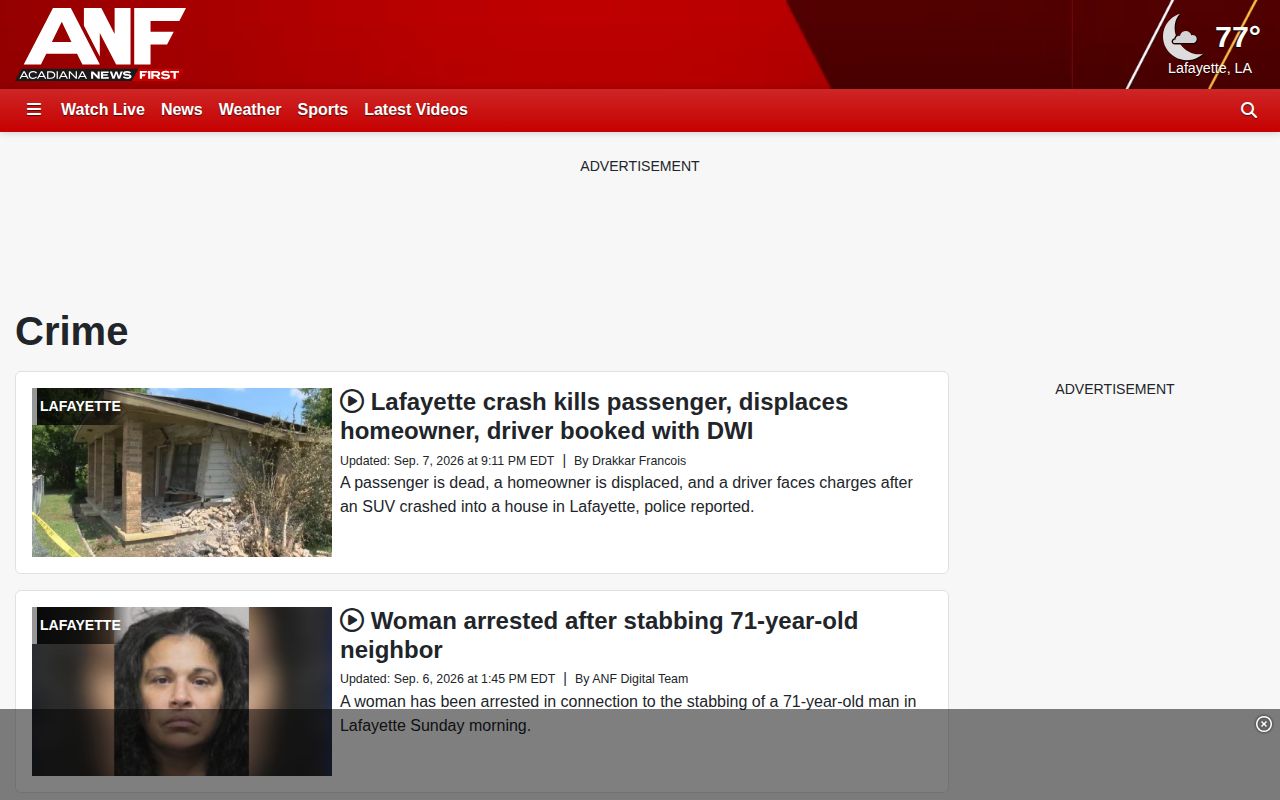
Story coverage adds event context. For verification, an LPSO arrest report and the court record remain the sources that count. The Acadiana Advocate crime and police section offers another regional archive to browse.
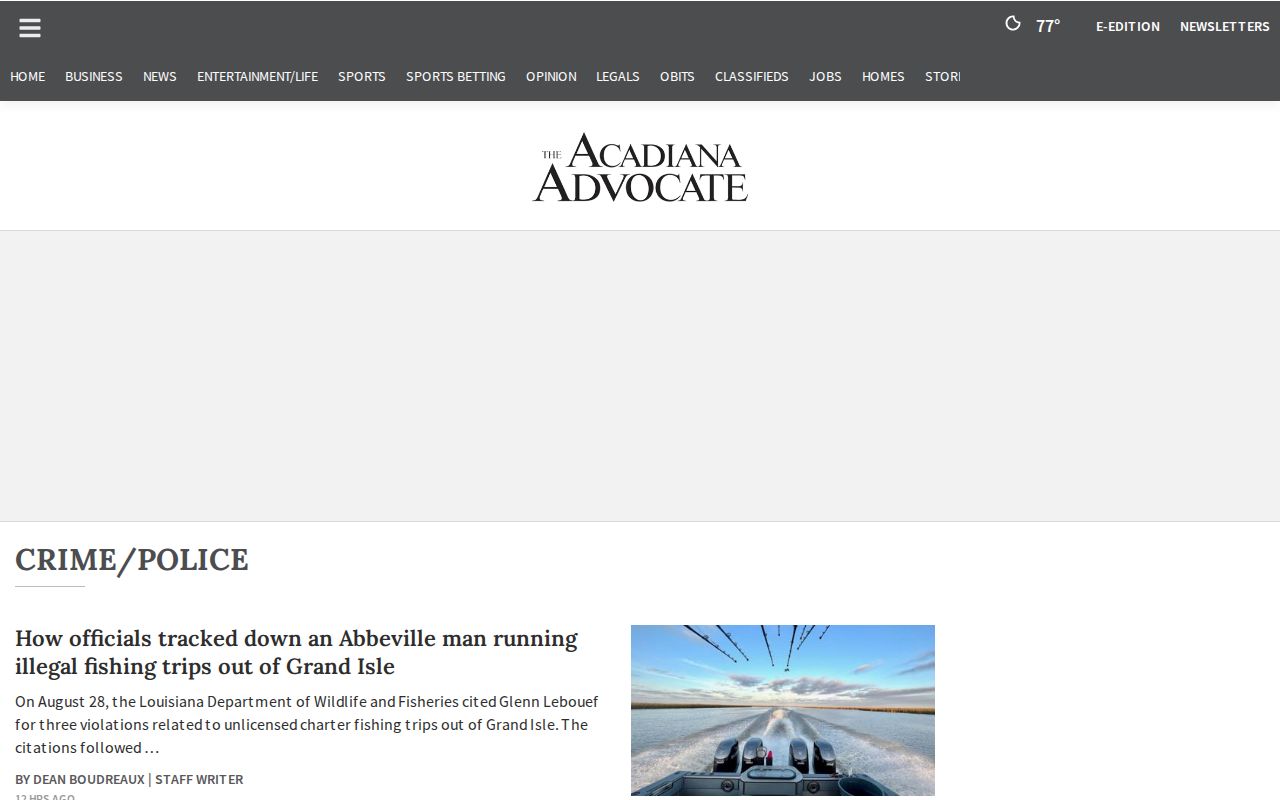
News pages are editorial choices, not booking lists. They are not custody sources either. Use a story to find the event, an agency statement, or the policy setting around a Lafayette Parish arrest. Then check names and case numbers against official records. A story can linger online after an arrest entry rolls off the blotter, but that persistence reflects an editorial archive choice, not an LPSO retention rule.
Older Lafayette Arrest Records
The Daily Arrest Report runs by date. LPSO says nothing about how far back the public pages stay browseable. No seven-day, 30-day, or permanent archive is promised. When an older report is missing, request the Daily Booking Report. Ask the LPSO Records Division for it. The current fee schedule prices that report at $10, while other documents, electronic copies included, run $1 per page.
Send requests to recordsrequest@lafayettesheriff.com, call 337-236-5845, or visit 303 West Vermillion Street in Lafayette. Include the approximate date, legal name, arresting agency, incident or booking number, and the exact record wanted. One caution applies. LPSO treats a request sent through another employee or an unlisted route as never received.
Louisiana retention law leans on approved schedules and generally gives only a minimum period when none fits. LPSO publishes no schedule covering Daily Arrest Reports, LPCC booking books, or booking photographs. No public schedule covers them. An online page can vanish. That alone proves no record destruction. A news story lingering online likewise says nothing about what LPSO still holds.
- Booking record
- The intake record created after an arrested person is delivered for jail processing.
- Disposition
- The court's later resolution, such as dismissal, plea, acquittal, or conviction.
- Retention schedule
- An approved rule governing how long an agency keeps a specific record series.
A blotter captures a single moment. The Daily Arrest Report shows each arrest as LPSO entered it that day.